Tesla’s Next Act: Beyond Automotive Dominance and Into the “Macrohard” Era
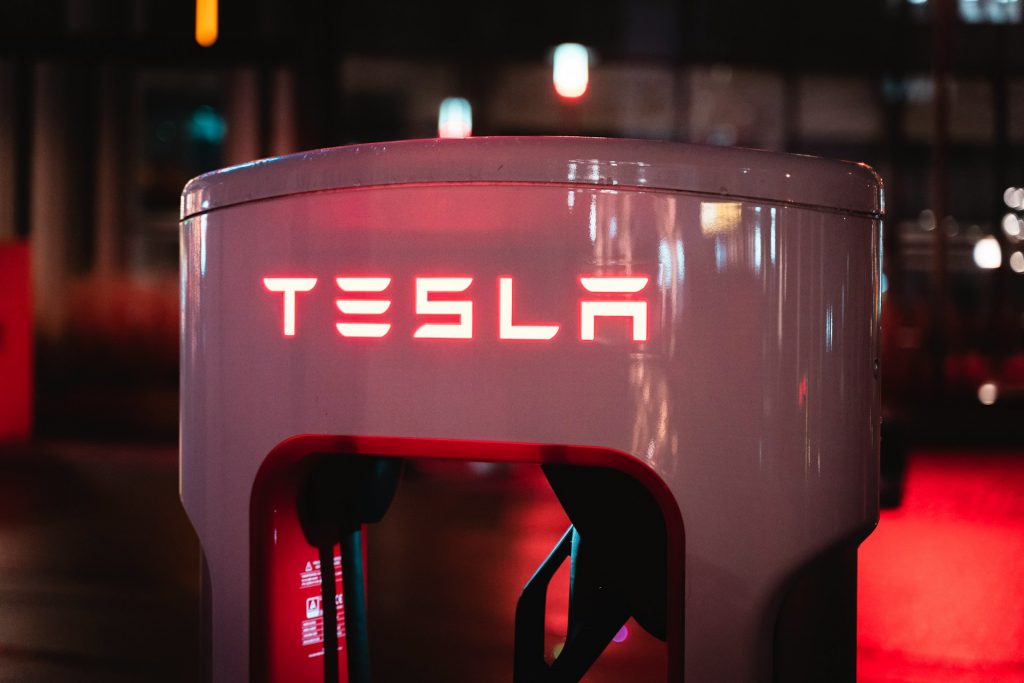
The modern business landscape moves at a blistering pace, and keeping a pulse on industry giants requires looking well beyond the surface. Traditionally known as a vertically integrated electric vehicle powerhouse, Tesla’s portfolio stretches far outside the confines of the automotive industry. Alongside a vehicle fleet that includes luxury and midsize sedans, crossover SUVs, a light truck, and a semi—resulting in nearly 1.64 million global deliveries in 2025—the company has its sights set on launching a sports car and a dedicated robotaxi service. Yet, Tesla is also deeply entrenched in residential and commercial energy generation, offering stationary battery storage, solar panels, and solar roofs. Coupled with a sprawling fast-charging network and an auto insurance arm, the automaker is rapidly evolving into a full-scale developer of real-world artificial intelligence and humanoid robotics.
The Valuation Divide
When stacked up against traditional auto manufacturers and recreational vehicle companies like General Motors, Ferrari, Ford, Thor Industries, Winnebago, and Workhorse Group, Tesla’s financial profile paints a picture of massive market expectations. The company boasts a staggering price-to-earnings (P/E) ratio of 398.53, sitting 19.02 times higher than the industry average. Its price-to-book ratio of 19.66 outpaces the industry by 6.12 times, while its price-to-sales ratio of 16.01 surpasses the average by an incredible 10.53 times. These figures strongly signal a premium, potentially overvalued stock compared to its rivals.
However, diving deeper into the financials reveals profound underlying strength. Tesla efficiently leverages its equity with a 1.04% Return on Equity (ROE), beating the industry average by 3.93%. Furthermore, the company generated $2.91 billion in EBITDA—3.55 times the industry norm—and a gross profit of $5.01 billion, which sits 6.77 times higher than the competition. These numbers highlight robust cash flow generation and massive profitability from its core operations.
Headwinds and the AI Pivot
Despite these strong profit margins, Tesla is facing genuine friction. The company’s recent revenue growth dipped to -3.14%, trailing significantly behind the industry average of 5.1%. This contraction points to real struggles in moving vehicle volume, a headwind reflected in a stock price that had dropped roughly 12.6% year-to-date by mid-March 2026. To counter this sluggish automotive demand and justify its sky-high valuation, CEO Elon Musk is steering the company toward a radical new frontier to completely redefine its business model.
Enter Macrohard and Digital Optimus
Announced by Musk on X in mid-March, “Macrohard”—also referred to as Digital Optimus—is an ambitious joint venture between Tesla and his AI startup, xAI. The project signals a monumental shift from using artificial intelligence as a mere digital tool to deploying it as an actual workforce. The architecture relies primarily on Tesla’s highly cost-effective AI4 hardware, actively minimizing the use of xAI’s more expensive NVIDIA setups.
The software itself operates on a dual system of “instinct” and “reason.” Grok, xAI’s language model, acts as the central conductor, bringing a broad, comprehensive understanding of the world to the table. Meanwhile, the Digital Optimus component handles granular, real-time execution. By processing the last five seconds of screen activity, it can actively control a mouse and keyboard just like a human operator.
Automating the Modern Office
The ultimate goal of Macrohard is to create an AI capable of navigating a computer interface to seamlessly automate complex office tasks. By leaning heavily on Tesla’s extensive background in computer vision, the system is being designed to manage spreadsheets, write code, tackle customer service inquiries, and operate complex enterprise software. Musk confidently proclaimed that the technology will eventually be able to replicate the functions of entire companies. The project’s name is a tongue-in-cheek jab at Microsoft, underscoring the billionaire’s belief that no other tech firm has managed to build a real-time, functional AI ecosystem of this caliber.
An ‘AWS Moment’ for Tesla?
If this bold vision materializes, it could severely disrupt the software industry and permanently alter the global labor market. More importantly for investors, it represents a potential “AWS moment” for Tesla. Just as Amazon Web Services transformed Amazon’s underlying profitability, Macrohard could shift Tesla’s perception from an auto manufacturer to a dominant, high-margin AI platform. Instead of simply purchasing software, companies would essentially lease digital labor directly from Musk’s corporate ecosystem.
Wall Street is already taking notice of the shift. Wedbush analyst Dan Ives recently described Tesla’s AI agents as a massive step forward and a clear “warning shot” across the tech sector. Coupled with the January agreement that saw Tesla acquire a $2 billion stake in xAI, this tight integration of Musk’s enterprises might be exactly what the company needs. By leaning into the massive expectations of the artificial intelligence boom, Tesla is positioning itself to offset its current automotive growing pains and spark its next major wave of growth.